
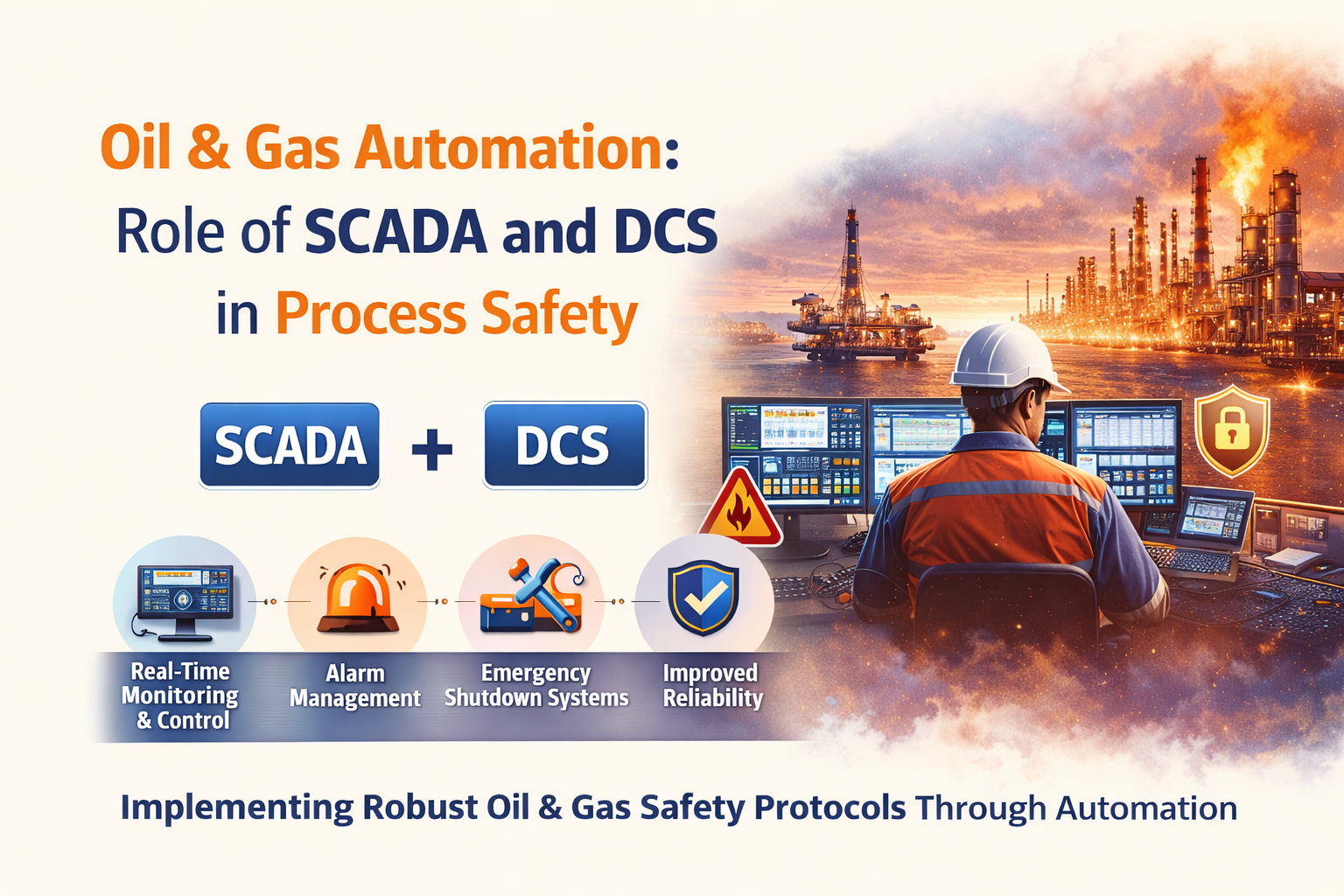
Oil & Gas Automation: Role of SCADA and DCS in Process Safety
The oil and gas industry is one of the most complex and high-risk industrial sectors in the world. It involves handling flammable gases, high pressures, extreme temperatures, and continuous operations. Even a small error can result in major safety incidents, production losses, or environmental damage. This is why automation plays a vital role in ensuring safe, reliable, and efficient operations.
Modern oil and gas facilities rely heavily on advanced automation systems such as SCADA and DCS to monitor processes, control operations, and prevent hazards. With the support of a reliable Gas & Thermal Solution Provider in India, industries can implement intelligent automation systems that significantly improve process safety and operational efficiency.
Understanding Automation in the Oil & Gas Industry
Oil and gas automation refers to the use of digital control systems, sensors, and software to manage upstream, midstream, and downstream operations. These systems help in:
- Monitoring gas flow, pressure, and temperature
- Controlling pipelines, compressors, and processing units
- Detecting leaks and abnormal conditions
- Managing alarms and emergency shutdowns
A professional Gas & Thermal Solution Provider in India designs automation solutions that integrate safety, reliability, and compliance into oil and gas operations.
What Is SCADA and Why Is It Important?
SCADA (Supervisory Control and Data Acquisition) is a centralized system used to monitor and control geographically distributed assets such as pipelines, gas terminals, and storage facilities.
Key Functions of SCADA in Oil & Gas
- Real-time data collection from field devices
- Remote monitoring of pipelines and stations
- Alarm generation during abnormal conditions
- Historical data logging and reporting
With SCADA systems implemented by an experienced Gas & Thermal Solution Provider in India, operators gain full visibility into operations and can respond quickly to potential safety threats.
What Is DCS and How Does It Enhance Safety?
DCS (Distributed Control System) is commonly used within processing plants such as refineries, gas processing units, and petrochemical facilities. Unlike SCADA, which covers wide areas, DCS focuses on detailed process control within a plant.
Key Benefits of DCS in Oil & Gas
- Continuous monitoring of process variables
- Precise control of temperature, pressure, and flow
- Automated safety interlocks
- Stable and reliable plant operations
A trusted Gas & Thermal Solution Provider in India ensures that DCS systems are properly configured to maintain safe operating conditions at all times.
Role of SCADA and DCS in Process Safety
Process safety is about preventing incidents that can harm people, assets, or the environment. SCADA and DCS systems play a central role in achieving this goal.
- Real-Time Monitoring and Early Warning
Both SCADA and DCS continuously collect data from sensors installed across the plant and pipeline networks. These systems detect deviations from normal operating conditions and alert operators instantly.
A reliable Gas & Thermal Solution Provider in India designs systems that ensure no critical parameter goes unnoticed.
- Leak Detection and Gas Monitoring
Gas leaks are one of the biggest safety risks in oil and gas operations. Automation systems integrate gas detectors and analyzers that identify leaks early and trigger alarms.
SCADA systems help monitor pipeline integrity over long distances, while DCS manages leak detection within processing units. This layered safety approach is best implemented by a professional Gas & Thermal Solution Provider in India.
- Emergency Shutdown Systems (ESD)
In case of critical failures, automation systems must respond instantly. SCADA and DCS are integrated with Emergency Shutdown Systems that:
- Isolate affected sections
- Stop gas flow
- Shut down equipment safely
An experienced Gas & Thermal Solution Provider in India ensures seamless integration between control and safety systems to minimize risk.
- Alarm Management and Operator Support
Too many alarms can overwhelm operators and reduce response effectiveness. Modern SCADA and DCS systems include intelligent alarm management that prioritizes critical alerts.
By partnering with a knowledgeable Gas & Thermal Solution Provider in India, industries can design alarm systems that improve situational awareness and operator response.
- Compliance with Safety Standards
Oil and gas operations must comply with strict safety and environmental regulations. Automation systems help maintain compliance by:
- Recording process data
- Generating safety reports
- Ensuring controlled operations
A trusted Gas & Thermal Solution Provider in India aligns automation systems with national and international safety standards.
Integration of Gas & Thermal Systems with Automation
Gas and thermal processes are at the heart of oil and gas operations. Automation ensures these systems operate within safe limits.
A skilled Gas & Thermal Solution Provider in India integrates:
- Gas flow and pressure control systems
- Thermal monitoring and heat management
- Burner management systems
- Energy optimization solutions
This integration improves safety while reducing energy consumption and operational costs.
Benefits of Automation for Oil & Gas Companies
Implementing SCADA and DCS solutions delivers multiple benefits, including:
- Improved operational safety
- Reduced human error
- Faster response to emergencies
- Increased plant availability
- Lower maintenance and energy costs
With expert support from a Gas & Thermal Solution Provider in India, companies can maximize these benefits while ensuring long-term reliability.
Digital Transformation and the Future of Oil & Gas Automation
The oil and gas industry is moving toward digitalization. Technologies such as Industrial IoT, advanced analytics, and remote monitoring are enhancing SCADA and DCS capabilities.
Future-ready solutions from a Gas & Thermal Solution Provider in India include:
- Remote asset monitoring
- Predictive maintenance
- Data-driven decision-making
- Enhanced cybersecurity
These advancements further strengthen process safety and operational efficiency.
Conclusion
Process safety is a top priority in the oil and gas industry, and automation plays a crucial role in achieving it. SCADA and DCS systems provide real-time visibility, precise control, and rapid response to abnormal conditions.
By working with a reliable Gas & Thermal Solution Provider in India, oil and gas companies can implement robust automation solutions that enhance safety, improve efficiency, and ensure regulatory compliance. As the industry continues to evolve, intelligent automation will remain the foundation of safe and sustainable oil and gas operations.