
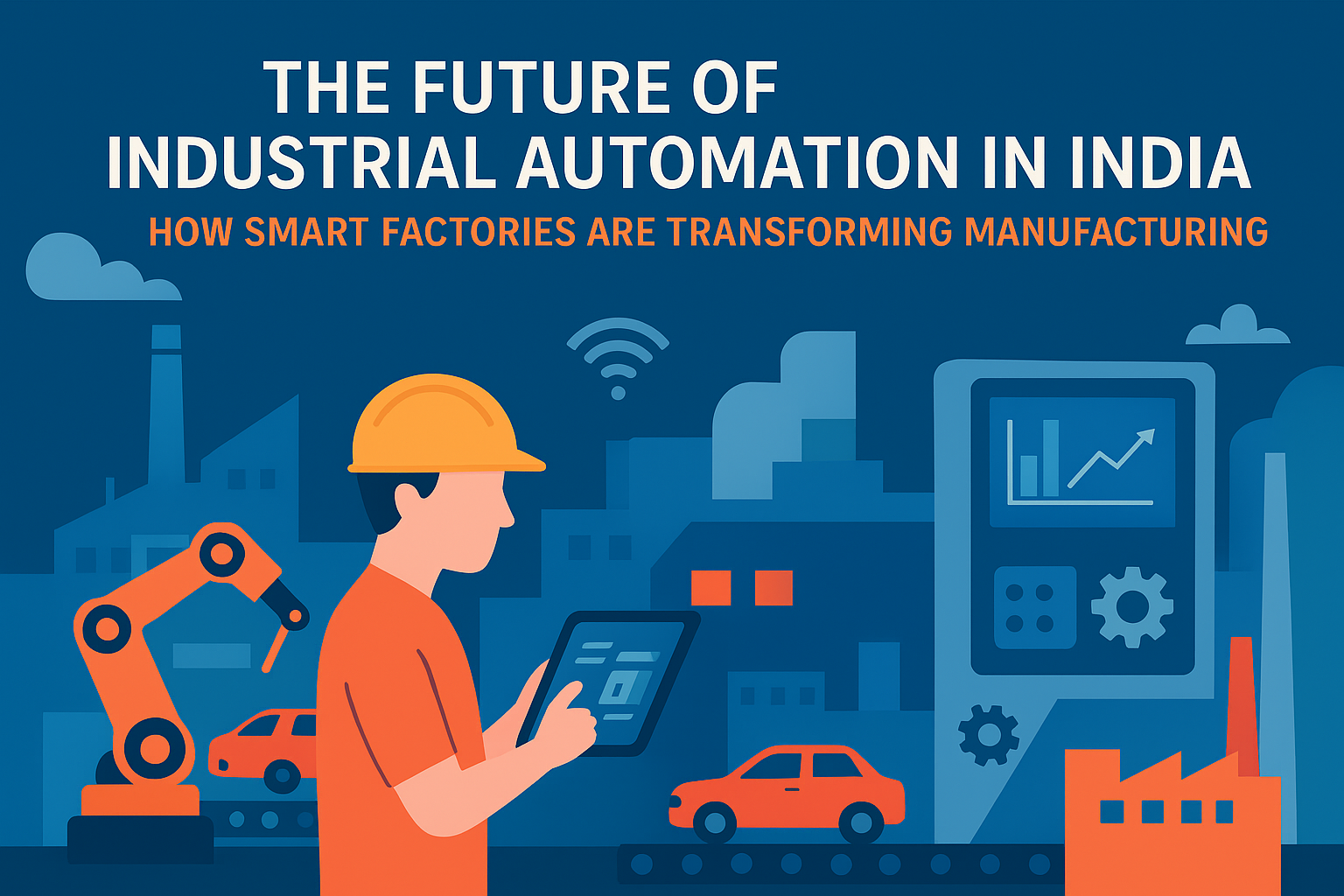
The Future of Industrial Automation in India: How Smart Factories Are Transforming Manufacturing
In today’s rapidly evolving industrial landscape, automation has become more than just a buzzword—it’s the backbone of modern manufacturing. Across the globe, industries are embracing smart technologies to streamline production, reduce waste, and improve efficiency. In India, this revolution is taking shape faster than ever, with the country emerging as a key hub for smart factory solutions and digital transformation.
For businesses looking to stay ahead, partnering with a trusted Industrial Automation Company India is no longer optional—it’s essential for competitiveness, productivity, and sustainable growth.
- Understanding Industrial Automation
Industrial automation refers to the use of control systems such as PLCs (Programmable Logic Controllers), SCADA (Supervisory Control and Data Acquisition), DCS (Distributed Control Systems), sensors, and robotics to operate industrial processes automatically, with minimal human intervention.
From simple assembly lines to highly advanced process plants, automation brings speed, precision, and consistency to manufacturing operations. The shift towards smart automation systems is reshaping how industries function—making production faster, safer, and more intelligent.
- The Growth of Industrial Automation in India
India’s industrial automation market is growing at an impressive pace. According to industry reports, the sector is expected to cross USD 13 billion by 2027, fueled by the government’s “Make in India” initiative, rising industrial digitization, and the growing adoption of Industry 4.0 technologies.
Several sectors are leading this transformation:
- Automotive manufacturing
- Pharmaceuticals
- Food and beverage
- Oil and gas
- Power and energy
- Chemical processing
- Water and wastewater treatment
Each of these industries is actively adopting automation to enhance quality, efficiency, and scalability. This surge in adoption has increased demand for expert partners like a professional Industrial Automation Company India that can design and implement end-to-end automation solutions.
- What Are Smart Factories?
A smart factory is an advanced manufacturing facility that uses connected systems and real-time data to optimize production. It integrates Industrial Internet of Things (IIoT), Artificial Intelligence (AI), machine learning, and cloud computing to create a self-learning and self-correcting production environment.
In simpler terms, smart factories think, learn, and act — all with minimal human supervision.
Key features of a smart factory include:
- Real-time monitoring and analytics
- Predictive maintenance using sensor data
- AI-driven quality control
- Connected machines (IIoT)
- Automated production lines
- Energy optimization
The ultimate goal is to reduce downtime, minimize waste, and increase overall equipment efficiency (OEE).
- Role of an Industrial Automation Company in India’s Smart Factory Revolution
An experienced Industrial Automation Company India plays a pivotal role in helping manufacturers transition from traditional to smart factories. Such companies offer a complete range of services—from consultation and design to installation, integration, and support.
Here’s how they add value:
- a) PLC and SCADA Solutions
They implement PLC (Programmable Logic Controller) and SCADA (Supervisory Control and Data Acquisition) systems that provide centralized control and real-time monitoring of industrial processes. These systems are crucial for reducing human errors and ensuring continuous, efficient production.
- b) IIoT Integration
Automation companies integrate Industrial IoT devices that connect sensors, controllers, and machines, allowing seamless data exchange and analysis. This helps in predictive maintenance and smarter decision-making.
- c) Energy and Thermal Solutions
Smart energy management systems and thermal control solutions help industries cut down on power consumption and reduce carbon footprints—supporting sustainable operations.
- d) Process Automation and Control
Automation partners design and implement process control systems that maintain consistency in production and enhance product quality.
- e) Training and Technical Support
A good automation company doesn’t just deliver systems—it also provides training and support to ensure smooth operation and maintenance.
- Benefits of Industrial Automation for Indian Manufacturers
The advantages of automation are vast and directly impact business performance:
- Improved Efficiency
Machines operate faster and more accurately than humans, leading to increased productivity and reduced cycle times.
- Cost Savings
Though the initial investment can be high, automation reduces labor costs, downtime, and wastage—resulting in long-term savings.
- Enhanced Product Quality
Automation ensures consistent quality by minimizing human error and maintaining precise control over production parameters.
- Safety and Reliability
Automated systems can handle dangerous tasks, reducing the risk of accidents and ensuring worker safety.
- Real-Time Data and Analytics
Through IIoT and SCADA systems, industries gain access to live production data, enabling better decision-making and predictive maintenance.
- Sustainability and Energy Efficiency
Automation allows better control over resource usage, making manufacturing processes eco-friendly and cost-efficient.
- Industry 4.0 and India’s Digital Manufacturing Future
Industry 4.0 is the fourth industrial revolution, combining automation, data analytics, cloud computing, and AI to create intelligent manufacturing ecosystems.
India is uniquely positioned to benefit from this revolution due to:
- A growing base of tech-driven automation companies
- Government support for smart manufacturing
- Increased digital literacy among engineers
- Rapid industrial modernization across sectors
As the demand for connected, data-driven operations increases, more industries will depend on automation experts to build integrated solutions that deliver efficiency and agility.
- Real-World Examples of Smart Factory Implementation
Many Indian manufacturers are already embracing smart technologies:
- Automobile plants use robotic arms and IoT sensors for assembly and quality inspection.
- Pharmaceutical industries implement SCADA and DCS systems for precision batch control and compliance.
- Energy and gas plants rely on automation for process monitoring and safety control.
- Food processing industries use automated conveyors and smart packaging systems to maintain hygiene and speed.
Each success story highlights how working with the right Industrial Automation Company India can drive measurable improvements in productivity and sustainability.
- Challenges in Automation Adoption
While the benefits are immense, challenges still exist:
- High initial investment for automation infrastructure
- Limited technical expertise in smaller industries
- Integration issues with legacy systems
- Cybersecurity risks in connected environments
However, with proper guidance, training, and system design from experienced automation partners, these challenges can be overcome effectively.
- The Road Ahead: India’s Smart Manufacturing Vision
The future of manufacturing in India is digital, data-driven, and automated. As more industries adopt Industry 4.0, we can expect:
- Fully connected factories with predictive AI analytics
- Increased collaboration between humans and machines
- Eco-friendly production through energy automation
- Greater export competitiveness through quality and efficiency
The role of every Industrial Automation Company India will continue to expand—becoming the cornerstone of industrial innovation and transformation.
Conclusion
India stands on the threshold of a technological revolution in manufacturing. The convergence of automation, IoT, AI, and energy optimization is shaping a smarter, safer, and more productive industrial future.
For businesses aiming to remain competitive, embracing automation is not just a trend—it’s a necessity. Collaborating with an expert Industrial Automation Company India ensures a seamless transition into the world of smart factories, empowering organizations to achieve operational excellence, sustainability, and long-term success.