
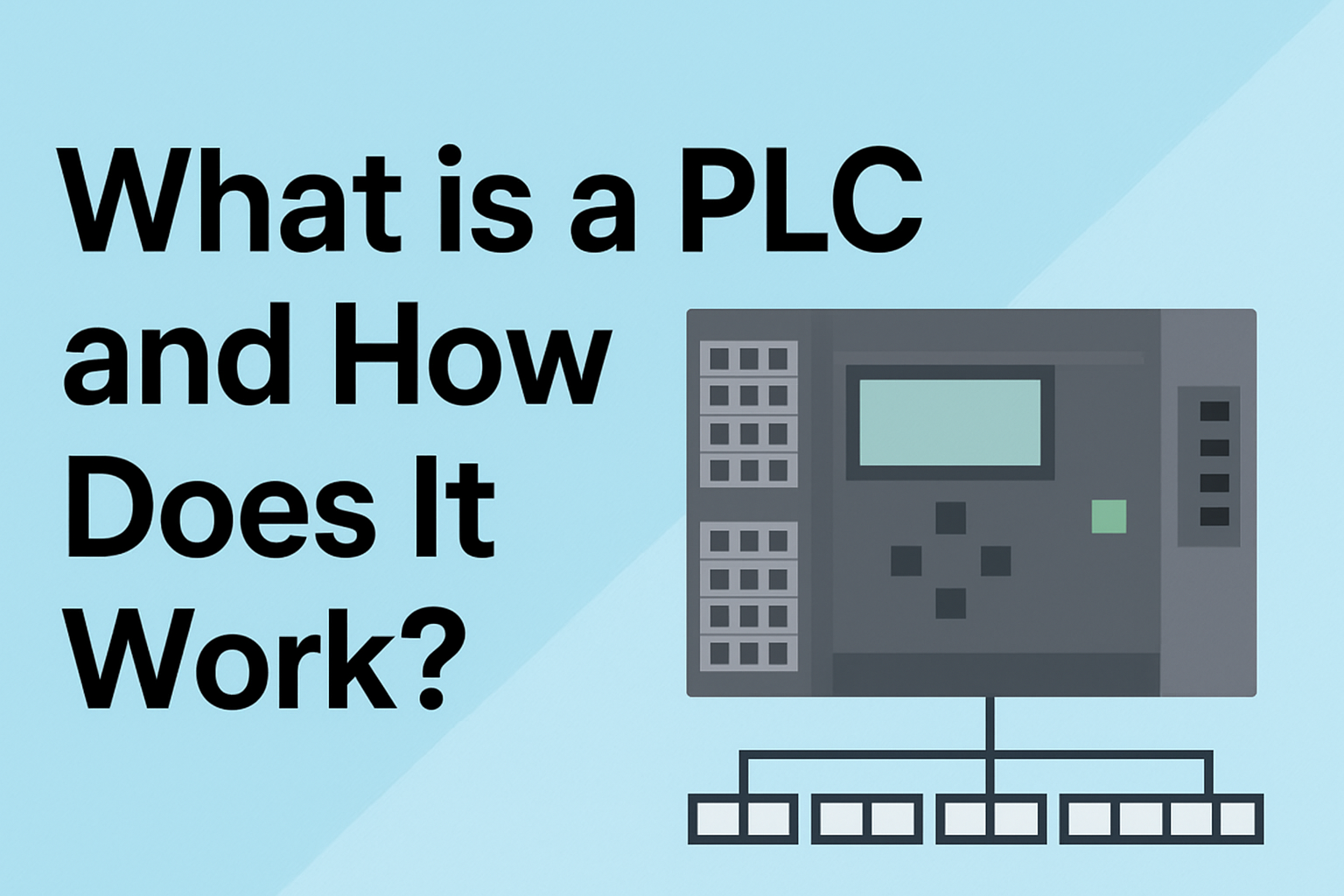
What is a PLC and How Does It Work?
In today’s fast-growing industrial world, automation has become an essential part of improving productivity, accuracy, and safety. One of the most important devices behind modern automation systems is the Programmable Logic Controller, commonly known as a PLC. Whether it’s a manufacturing plant, power station, packaging unit, or water treatment plant, PLCs play a major role in controlling machines and processes.
Companies across the country, including leading Electrical Control Panel Manufactures India, rely heavily on PLCs to build efficient, reliable, and safe industrial systems. But what exactly is a PLC, and how does it work? Let’s understand this in a simple and informative way.
- What is a PLC?
A PLC (Programmable Logic Controller) is a digital industrial computer used to control machines, equipment, and processes automatically. It replaces traditional relay-based control systems and offers more flexibility, speed, and reliability.
PLCs are designed to operate in harsh industrial conditions such as heat, dust, vibration, and moisture. They continuously monitor input signals, make logical decisions based on the program, and send commands to output devices like motors, valves, and actuators.
- Why Was the PLC Invented?
Before PLCs, industries used relay-based control systems, which had several disadvantages:
- Large number of wires
- Hard to troubleshoot
- Time-consuming to modify
- Low flexibility
- Higher maintenance cost
To solve these issues, PLCs were introduced in the late 1960s. They replaced complex wiring with simple programming, making automation easier, faster, and more scalable.
Today, PLCs are one of the core elements used by automation engineers and Electrical Control Panel Manufactures India for industrial control systems.
- Key Components of a PLC
A typical PLC consists of the following components:
- a) CPU (Central Processing Unit)
This is the brain of the PLC. It processes data, executes commands, and makes decisions based on the program.
- b) Power Supply
It provides stable power to run the PLC system.
- c) Input Modules
They receive real-world signals from sensors, switches, temperature devices, limit switches, etc.
- d) Output Modules
These modules send signals to control devices like motors, solenoids, relays, and pumps.
- e) Programming Device (Laptop/Software)
Engineers write the logic using PLC programming software and transfer it into the PLC.
- f) Communication Ports
Used to connect PLC with SCADA, HMI, or other PLCs for data exchange.
- How Does a PLC Work?
A PLC operates in a continuous cycle called the scan cycle. It has four major stages:
Step 1: Read Inputs
The PLC reads the status of all input devices such as sensors or switches.
Step 2: Process Logic
The CPU processes the input data using the logic programmed by the engineer.
Step 3: Update Outputs
Based on the logic, the PLC updates output devices like motors, alarms, or valves.
Step 4: Repeat the Cycle
This cycle repeats many times per second. Because of this speed, PLCs can respond quickly to changes in industrial processes.
This fast and reliable cycle of reading, processing, and controlling makes PLCs a preferred choice for automation by many Electrical Control Panel Manufactures India.
- Types of PLCs
Different industries require different types of PLCs based on complexity and size of the operation.
- a) Compact PLC
- Small size
- Limited I/O
- Used in small machinery
- b) Modular PLC
- Expandable modules
- Suitable for large applications
- Used in factories, plants, and production lines
- c) Rack-mounted PLC
- Complex and advanced
- Supports many input/output modules
- Used in power plants, manufacturing units, and automation lines
- Where Are PLCs Used? (Applications)
PLCs are used in almost every industry due to their flexibility, reliability, and easy integration into control systems.
Some major applications include:
- Manufacturing machines
- Conveyor systems
- Food processing
- Packaging lines
- Water and wastewater management
- Power stations
- Building automation
- Automotive industry
- Oil and gas plants
- Pharmaceutical production
In all these sectors, PLC-based panels designed by Electrical Control Panel Manufactures India help industries run their processes smoothly and safely.
- Benefits of Using PLCs
PLCs offer many advantages:
✔ High Reliability
Designed for tough industrial environments.
✔ Flexibility
Programs can be changed easily without rewiring.
✔ Saves Time and Money
Troubleshooting is quick, reducing downtime.
✔ Scalability
More modules can be added whenever needed.
✔ Real-time Monitoring
PLCs communicate with SCADA and HMI systems to provide live data.
✔ Safety
Automatic shutdown and alerts help prevent accidents.
✔ Integration with Modern Technologies
PLCs support IoT, cloud, and smart automation systems.
These benefits make PLCs an essential part of automation design for Electrical Control Panel Manufactures India.
- PLC Programming Languages
PLCs can be programmed in various languages. The most commonly used are:
- Ladder Logic (LD) – most popular and easy to understand
- Function Block Diagram (FBD) – used for process industries
- Structured Text (ST) – similar to high-level programming
- Instruction List (IL) – text-based commands
- Sequential Function Chart (SFC) – flowchart-style programming
Engineers choose the language based on the application and complexity.
- Future of PLCs in Automation
The future of PLCs looks promising. With the rise of Industry 4.0, smart factories, and IIoT (Industrial Internet of Things), PLCs are becoming more intelligent, faster, and capable of handling complex tasks.
Modern PLCs support:
- Remote monitoring
- Cloud storage
- Data analytics
- Artificial intelligence integration
- Predictive maintenance
As industries continue to grow, PLCs will remain one of the most important tools for automation specialists and Electrical Control Panel Manufactures India.
Conclusion
A PLC is a powerful and reliable device used to automate machines, equipment, and industrial processes. It reads inputs, processes logic, and controls outputs quickly and efficiently. PLCs are used across multiple industries due to their flexibility, scalability, and accuracy.
With advanced technology and the support of expert Electrical Control Panel Manufactures India, businesses can achieve smarter, safer, and more productive operations.