
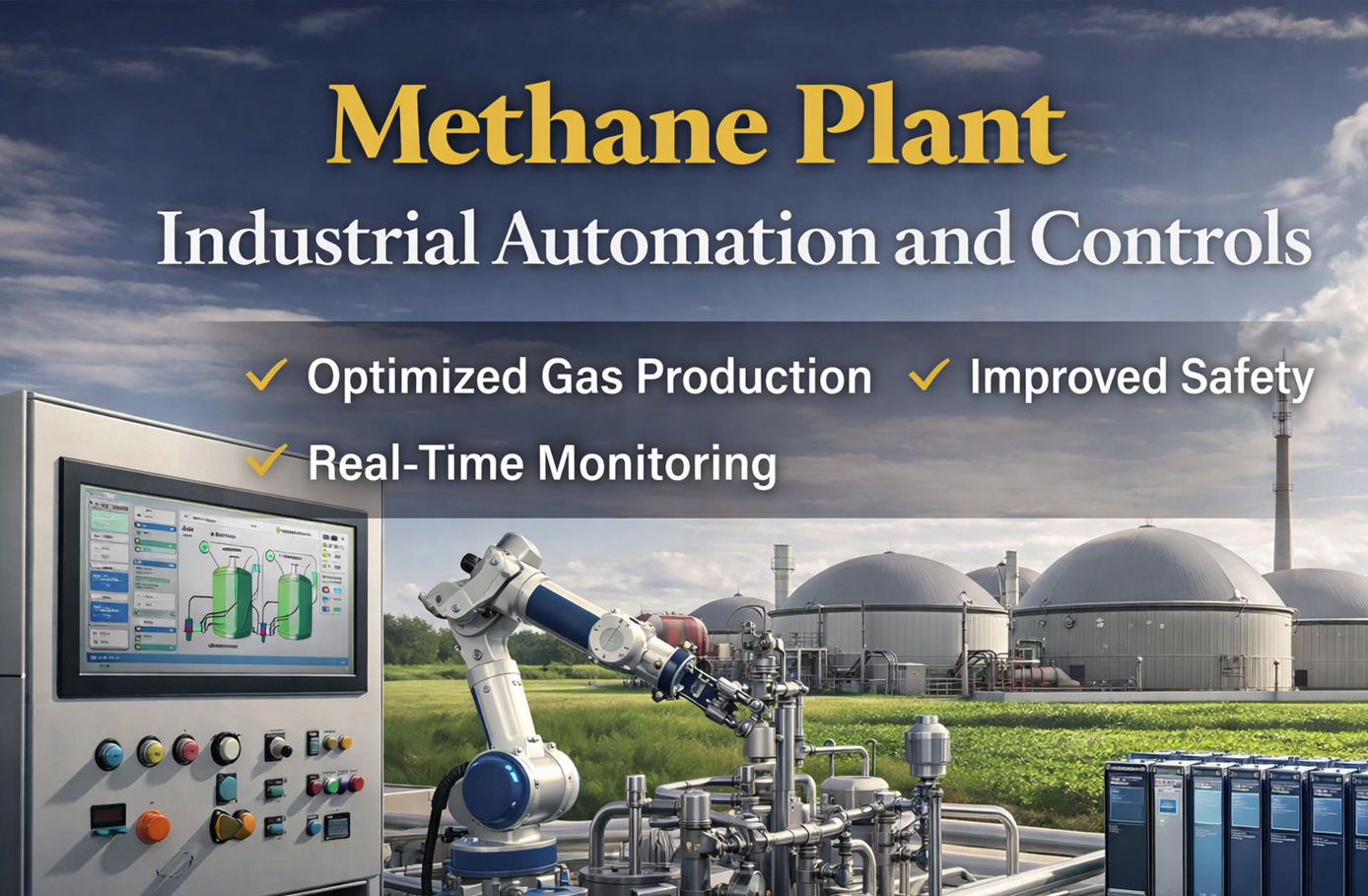
Methane Plant Industrial Automation and Controls
Industrial growth and environmental sustainability are now going hand in hand. One of the most promising areas supporting this balance is methane production through biogas plants. Methane plants convert organic waste into useful energy, helping industries reduce waste and generate clean fuel.
However, to operate efficiently and safely, these plants require advanced systems. This is where Methane plant industrial automation and controls play a vital role. Automation ensures that methane plants run smoothly, safely, and with maximum efficiency.
In this blog, we will explore how automation works in methane plants, its benefits, key technologies, and best practices for industries in India.
What Is a Methane Plant?
A methane plant, also known as a biogas plant, produces methane gas through the anaerobic digestion of organic materials such as agricultural waste, food waste, and sewage.
The process involves:
- Collection of raw organic material
- Digestion in an oxygen-free environment
- Production of biogas (mainly methane and carbon dioxide)
- Storage and distribution of gas
Methane can be used for:
- Power generation
- Heating applications
- Fuel for industrial processes
To manage this complex process efficiently, industries depend on Methane plant industrial automation and controls.
Importance of Automation in Methane Plants
Methane production involves multiple variables such as temperature, pressure, gas composition, and feedstock quality. Manual monitoring is not enough to handle these variables effectively.
Automation helps in:
- Continuous monitoring of plant operations
- Accurate control of process parameters
- Improved safety and reliability
- Reduction of human errors
- Optimized gas production
With automation, methane plants can operate 24/7 with minimal manual intervention.
Key Components of Methane Plant Automation
- PLC (Programmable Logic Controller)
PLCs are the core control units in methane plants. They manage different processes such as feeding systems, mixing, heating, and gas flow.
Functions include:
- Controlling pumps and motors
- Managing feedstock input
- Regulating temperature and pressure
- Automating start and stop operations
PLCs ensure smooth and precise operation of plant equipment.
- SCADA System
SCADA (Supervisory Control and Data Acquisition) systems provide real-time monitoring and control of the entire plant.
SCADA helps operators:
- View process data on dashboards
- Monitor gas production levels
- Receive alarms for abnormal conditions
- Generate reports and analytics
This improves decision-making and operational transparency.
- Sensors and Instrumentation
Sensors are essential for collecting real-time data from different parts of the plant.
Common sensors used in methane plants:
- Temperature sensors
- Pressure transmitters
- Gas analyzers
- Flow meters
- Level sensors
Accurate data from sensors ensures better control and optimization.
- Gas Monitoring Systems
Methane plants must maintain proper gas composition for safety and efficiency.
Gas monitoring systems:
- Measure methane concentration
- Detect harmful gases
- Prevent gas leaks
- Ensure safe operation
These systems are critical for avoiding accidents and ensuring compliance with safety standards.
- DCS (Distributed Control System)
For large-scale methane plants, DCS is used to manage complex processes.
DCS offers:
- Centralized control
- High reliability
- Redundant systems for safety
- Continuous process monitoring
It is ideal for industrial-scale operations.
Benefits of Methane Plant Industrial Automation and Controls
- Increased Gas Production Efficiency
Automation optimizes process parameters such as temperature, pH levels, and feedstock input. This results in higher methane yield and better plant performance.
- Improved Safety
Methane is a flammable gas, and improper handling can lead to accidents. Automation systems detect leaks, control pressure, and trigger alarms to prevent hazards.
- Reduced Operational Costs
Automation reduces the need for manual labor and minimizes errors. Predictive maintenance also lowers repair costs and prevents unexpected breakdowns.
- Real-Time Monitoring
Operators can monitor plant performance from a central control room or even remotely. This improves response time and operational control.
- Better Compliance and Reporting
Automation systems generate reports for regulatory compliance, making it easier to meet environmental and safety standards.
Best Practices for Methane Plant Automation in India
To get maximum benefits, industries should follow these best practices:
- Choose Scalable Automation Systems
Methane plants may expand over time. Automation systems should be flexible and scalable to accommodate future growth.
- Use High-Quality Sensors
Accurate data is critical for efficient operations. Investing in reliable sensors ensures better monitoring and control.
- Implement Predictive Maintenance
Use data analytics to predict equipment failures before they happen. This reduces downtime and maintenance costs.
- Focus on Safety Systems
Install gas leak detection systems, emergency shutdown systems, and alarms to ensure plant safety.
- Integrate with IoT and Cloud Platforms
Modern methane plants benefit from IoT-enabled systems that allow remote monitoring and advanced analytics.
- Ensure Proper Training
Operators should be trained to use automation systems effectively. Skilled personnel improve system performance and safety.
Role of Industrial Automation Companies
Implementing automation in methane plants requires expertise in control systems, instrumentation, and process engineering.
An experienced automation company provides:
- System design and integration
- PLC and SCADA programming
- Installation and commissioning
- Maintenance and support
- Custom solutions for different industries
Choosing the right partner ensures successful project execution and long-term efficiency.
Applications of Methane Plant Automation
Methane plant automation is used in various industries, including:
- Agriculture and dairy farms
- Food processing industries
- Municipal waste management
- Wastewater treatment plants
- Sugar and distillery industries
Automation helps these sectors convert waste into valuable energy efficiently.
Challenges in Methane Plant Automation
Despite its benefits, automation comes with challenges:
- High initial investment
- Complexity of system integration
- Need for skilled workforce
- Maintenance of advanced systems
However, long-term benefits outweigh these challenges.
Future of Methane Plant Automation in India
India is focusing on renewable energy and waste management. Government initiatives and environmental policies are encouraging the adoption of biogas and methane plants.
Future trends include:
- AI-based process optimization
- Smart sensors and IIoT integration
- Cloud-based monitoring systems
- Fully automated methane plants
Automation will play a key role in making methane plants more efficient and sustainable.
Conclusion
Methane plants are an important part of India’s clean energy future. However, efficient and safe operation is only possible with advanced automation systems.
Methane plant industrial automation and controls enable industries to optimize gas production, improve safety, reduce costs, and ensure compliance.
By adopting modern automation technologies such as PLC, SCADA, DCS, and IoT, industries can transform methane plants into smart, efficient, and reliable energy systems.
Investing in automation today will help industries achieve long-term sustainability and operational excellence in the growing renewable energy sector.